
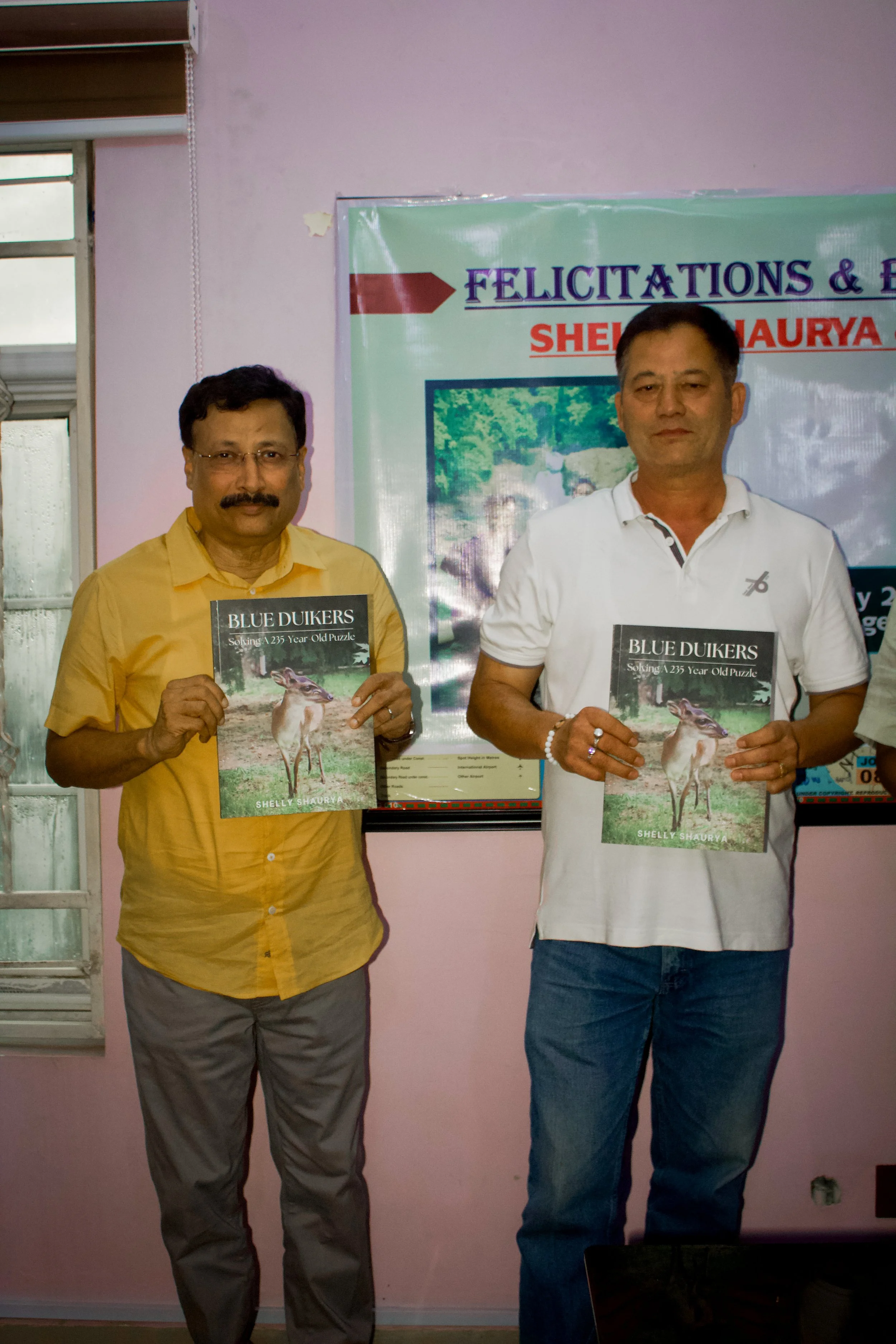
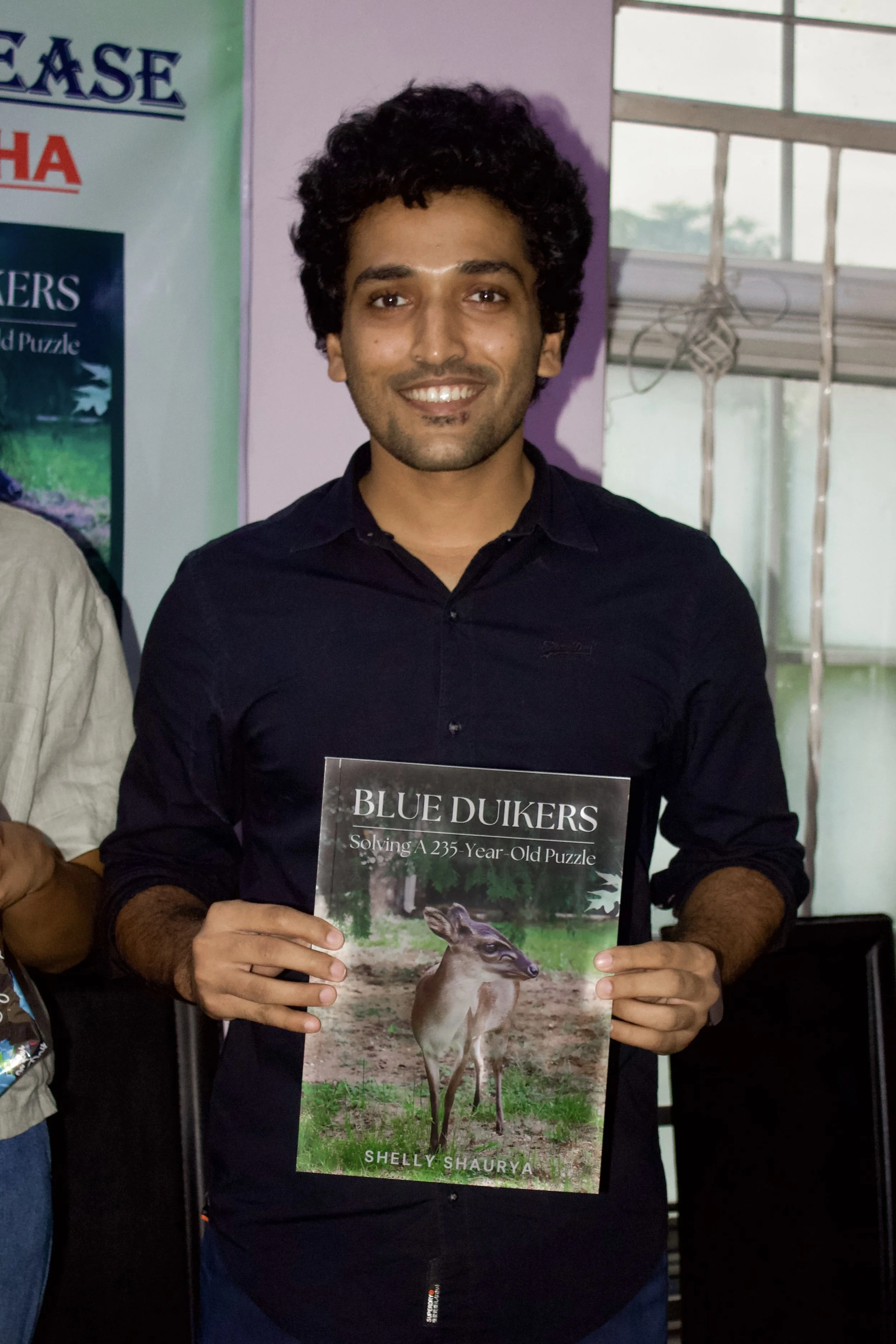
The Shelly Shaurya Foundation marked the launch of Blue Duikers: Solving a 235-Year-Old Puzzle, an eBook by author and researcher Shelly Shaurya, at a gathering in Calabar, Nigeria. The event was organised in collaboration with a local wildlife conservation organisation with which Shaurya had been working on a pro bono basis, supporting their efforts to rescue and rehabilitate endangered rainforest species threatened by the bushmeat trade.
The book explores the blue duiker (Philantomba monticola), one of the smallest antelopes in the world, found across the rainforests of West and Central Africa. In Cross River State—particularly around the Cross River National Park, Afi Mountain Wildlife Sanctuary, and the Mbe Mountains—the species still survives, though increasing habitat fragmentation, illegal logging, and bushmeat hunting have placed growing pressure on its populations.
During the event, Shelly Shaurya spoke about the central question that inspired the book: why an animal whose coat is largely brown came to be known as the “blue” duiker. Through field observations and time spent studying the species in Cross River, he explained how the answer may lie in the animal’s pre-orbital glands, located just below the eyes, which produce a faint bluish secretion used for territorial marking. The observation offers a possible explanation for the name that differs from the commonly repeated claim that the species appears blue in sunlight.
The discussion also reflected on broader ecological themes. Small herbivores like the blue duiker play quiet but important roles in rainforest ecosystems—dispersing seeds, feeding selectively on fruits and leaves, and contributing to the balance of forest undergrowth. Their survival is closely tied to the health and continuity of rainforest habitats.
Participants at the event included conservation practitioners, local community members, students, and individuals interested in wildlife protection and environmental research. The session also highlighted the importance of documenting field knowledge and Indigenous observations, which often contain ecological insights that can fade when not recorded.
The event concluded with an open interaction between the author and attendees, encouraging dialogue on conservation challenges in West African rainforests and the importance of observing and documenting wildlife before knowledge and ecosystems disappear.